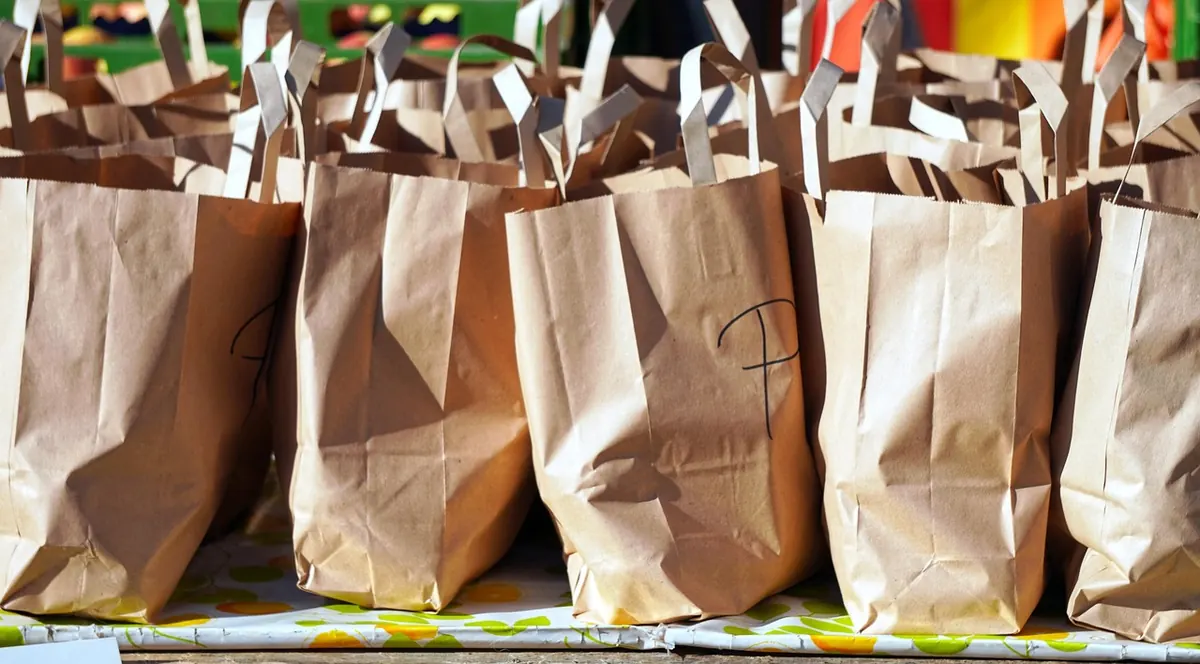
Avocados are sold hard for a reason: they travel better and last longer on the shelf. But that means you often bring home a fruit that feels more like a cricket ball than something you want to slice onto toast. The good news is that ripening is predictable. With the right amount of warmth, a paper bag and a ripe banana or apple, most rock-hard avocados will be ready in three to five days. Some will be ready in one or two. Here's how to read the signs day by day, without guessing — and how to rescue the ones that seem determined to stay hard forever.
An avocado only ripens after it is picked. It will not soften on the tree in the same way, so the clock starts in your kitchen. A rock-hard avocado is not bad; it is simply unripe. The flesh inside is firm, the skin may be green, and the stem end is tight. During ripening, enzymes break down pectin in the flesh, turning it creamy. Ethylene gas, which the avocado produces itself, drives that process. Your job is to keep that gas around the fruit and keep the fruit warm enough to respond.
This is why the bag matters so much. An avocado sitting loose on the counter releases ethylene into the whole room, where it drifts away harmlessly. The same avocado inside a paper bag is breathing in its own concentrated gas, which speeds the process up considerably. Adding a ripe banana or apple — both heavy ethylene producers — is like adding a second engine. You are not really ripening the avocado with the banana; you are giving it a stronger signal to ripen itself.
Temperature matters just as much as gas. Ripening stalls below roughly 10°C and slows noticeably in a cold kitchen. That is why a fridge-hard avocado can sit for two weeks without changing, and why the same fruit on a warm shelf softens in days. Warmth is the accelerator; ethylene is the messenger.
Avoid sealed plastic bags and airtight containers. They trap moisture along with the ethylene, which invites mould long before the fruit is ready. If you only have plastic, leave the bag loosely open at the top.
No two avocados ripen at exactly the same rate, but the arc is almost always the same. Here is what to expect from a genuinely rock-hard fruit in a bag at room temperature.
Hass avocados, the most common variety in most shops, tend to follow this schedule closely. Larger, smoother-skinned varieties such as Fuerte or Bacon can take a day or two longer and often stay green even when ripe.
Most people ruin an avocado by checking it wrong. Squeezing the middle of the fruit crushes the flesh against the pit and leaves a bruise that shows up as a brown patch days later. Instead, cup the avocado in your palm and press very gently with your thumb near the stem end, where the fruit is thinnest and most revealing.
You can also use the stem test. Flick the small cap of stem at the top with your fingernail. If it resists, the avocado is underripe. If it pops off easily and you see green underneath, it is ready. If the flesh beneath is brown, it is overripe and should be used immediately — mashed into guacamole, blended into a dressing, or baked into brownies.
Ripe avocados do not announce themselves. They go quiet, then soft, then too soft, sometimes within a single afternoon. Checking daily is the whole skill.
The microwave trick does not ripen an avocado; it cooks it. You get a warm, hard or mushy fruit with an unpleasant flavour. The oven is worse. And while the "bury it in rice" method does trap some ethylene, it is slower than a paper bag, messier, and leaves you picking grains off your fruit. The bag-and-banana method beats it on every count.
Ripening an avocado is not a mystery, it is a small piece of food science happening on your counter. Give it warmth, trap the gas, add a ripe companion, and check it once a day. In three to five days you will have exactly what you wanted — and once you have done it twice, you will never guess again.
Photo: matthiasboeckel / Pixabay
Simple UK recipes that turn soft, overripe bananas, berries and stone fruit into banana bread, smoothies, compote...
A practical guide to the low-cost kit that controls humidity, airflow and ethylene when ripening fruit at home, from...
Learn how to ripen green tomatoes indoors before frost using paper bags, boxes and trays, with simple light and...

Bring your fruit to perfect ripeness at home.
