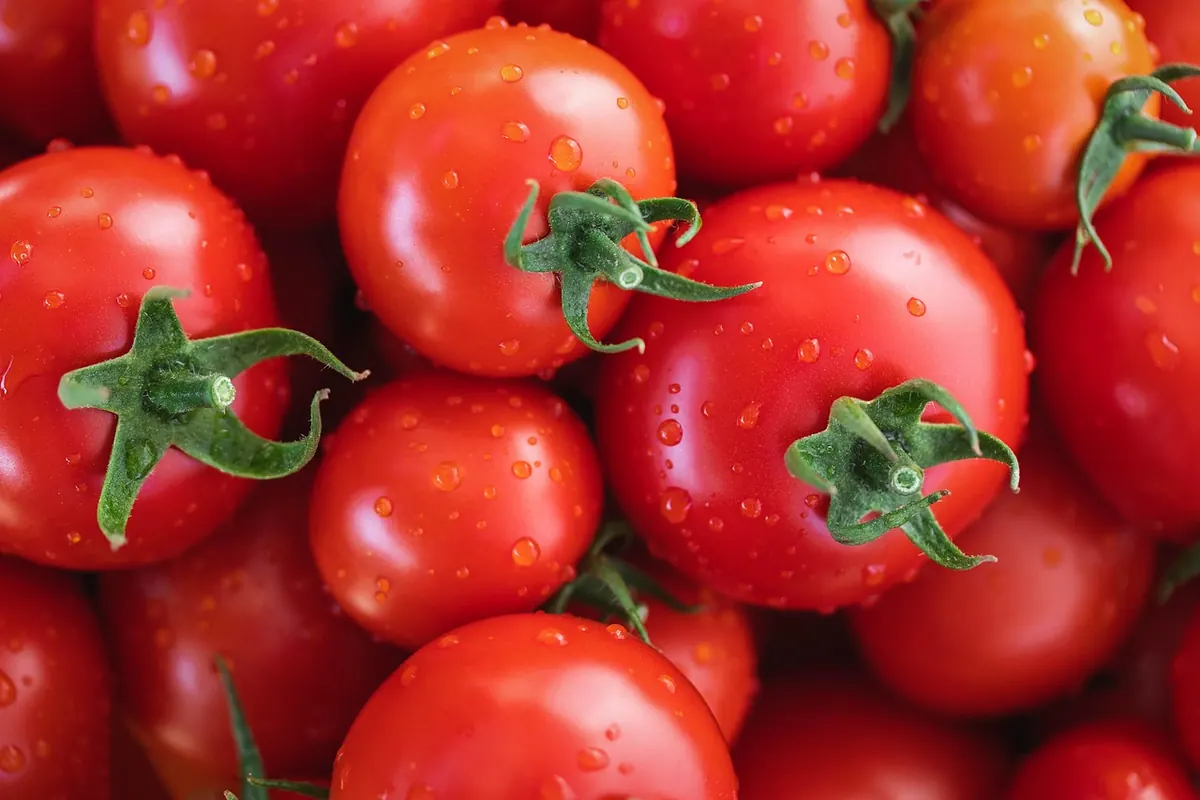
Every October, the same dilemma appears on kitchen windowsills and greenhouse benches across the country. The plants are still heavy with fruit, the forecast has turned sharp, and none of those tomatoes are showing the faintest hint of red. Frost will finish the job in a single night if you leave them outside, but there is no need to lose the crop. Green tomatoes ripen perfectly well indoors, often within two to four weeks, and the fruit you coax along on a tray tastes far better than anything you will find in a supermarket in November.
The trick is understanding what the fruit actually needs. A tomato that has reached what growers call the mature green stage — full-sized, glossy, firm, with a pale star at the blossom end — already contains everything required to finish ripening. It simply needs warmth, ethylene gas and a little patience. A tomato that is small, dull and hard may never ripen properly, and is better used for chutney.
Before the first frost is forecast, pick everything that stands a chance. Sort as you go, because your pile will contain three different groups and they behave differently.
Leave the stalk on if you can — it helps the fruit keep longer — and handle gently. A bruised tomato rots faster than a clean one and can take its neighbours with it. If any fruit has split, mould or soft brown patches, compost it rather than adding it to the ripening tray.
If a hard frost is coming and you have a garage, shed or cool porch, the simplest approach is to lift the entire plant, roots and all, and hang it upside down. Tomatoes continue to ripen on the vine as they draw on whatever reserves remain in the stems. Hang the plant somewhere frost-free with decent airflow, and pick fruit as it colours. This works remarkably well for cherry varieties, which tend to drop from the vine once they are ready. The downside is space, and the plant will shed leaves and make a mess, so put something underneath.
For small quantities, a paper bag is hard to beat. Put two or three mature green tomatoes in a brown paper bag, fold the top over loosely, and leave it on the kitchen counter. Paper holds just enough ethylene — the natural ripening gas the fruit gives off — while letting excess moisture escape. Check daily, because a bag can go from green to over-ripe quite suddenly once it starts.
A ripe banana, apple or already-coloured tomato placed in the bag speeds things up considerably, since all three release ethylene. You can also use a clean, ripe pear. Do not add more than one companion per bag, and remove it once it starts to spoil. If you notice condensation inside the bag, open it up for a few hours. Damp fruit develops mould quickly.
When you are dealing with kilos rather than a handful, shallow boxes and trays are more practical. Line a cardboard box or a seed tray with newspaper, then arrange the tomatoes in a single layer, stem-side down, so they are not touching. Crowding is the main cause of failure here: fruit that presses against fruit develops soft spots, and one rotten tomato can spoil a whole layer.
Stack trays loosely or slide boxes under a bed or on top of a wardrobe, and inspect them every two or three days. As each tomato colours, move it to a bowl on the counter to finish and be eaten. Sorting like this keeps the green ones undisturbed and stops ripe fruit from turning mushy while you wait for the rest.
Some growers wrap each tomato individually in newspaper before boxing them. This slows ripening slightly and reduces the spread of rot, which is useful if you have a large crop and cannot check the boxes often. Unwrap them when you are ready to speed things up. If you want to slow the whole process down — say you are going away — move the boxes somewhere cooler, around 12–15°C, and they will tick over slowly without spoiling.
Warmth matters far more than light. Ripening is driven by temperature and ethylene, not by sunlight, so a dark cupboard is a perfectly good place to ripen tomatoes. In fact, direct sun on a windowsill can cook the fruit or cause uneven ripening and scalding. A steady 18–22°C is the sweet spot. Below about 12°C ripening stalls, and fruit stored too cold loses flavour and texture, turning mealy. Above roughly 27°C the fruit ripens fast but tastes bland and goes soft around the shoulders.
Light does have one use: once a tomato is fully coloured, a day or two on a bright windowsill improves its flavour slightly, and it certainly looks better. But do not rely on the windowsill for ripening itself. The classic mistake is lining every green tomato along a south-facing ledge in October, where the top halves soften and the bottoms stay stubbornly green.
Good air movement is the quiet hero of indoor ripening. A lidded plastic tub will trap moisture and produce mould within days. If you must use a container, leave the lid off or punch holes in it. Paper bags, cardboard boxes and open trays all breathe naturally, which is why they work so well.
Expect a few losses; it is normal with a late crop. Soft brown patches mean rot — remove that fruit immediately and check its neighbours. Fruit that stays hard and green for three weeks or more is probably immature, and no amount of bananas will fix it. Use those for cooking.
If ripening is painfully slow, move the trays somewhere warmer, add a ripe banana, or group the tomatoes more closely together in a bag. If they are ripening faster than you can eat them, roast them with garlic and olive oil and freeze the result, or make a batch of passata. Ripened green-harvested tomatoes are excellent cooked, even if they are a little less sweet raw than their August counterparts.
Pick before the frost, sort by ripeness, and get the fruit into paper bags or single-layer trays in a warm room. Check every day or two, remove anything that colours or spoils, and keep the layers shallow. Add a ripe banana when you want to hurry things along, keep the temperature steady between 18 and 22°C, and skip the sunny windowsill. Do that, and you will still be eating your own tomatoes at Christmas — or at least well into November, which for most of us is reward enough.
Photo: Myriams-Fotos / Pixabay
Simple UK recipes that turn soft, overripe bananas, berries and stone fruit into banana bread, smoothies, compote...
A practical guide to the low-cost kit that controls humidity, airflow and ethylene when ripening fruit at home, from...
How to choose early-ripening fig varieties, grow them in pots, protect them over winter and tell when the fruit is...

Bring your fruit to perfect ripeness at home.
