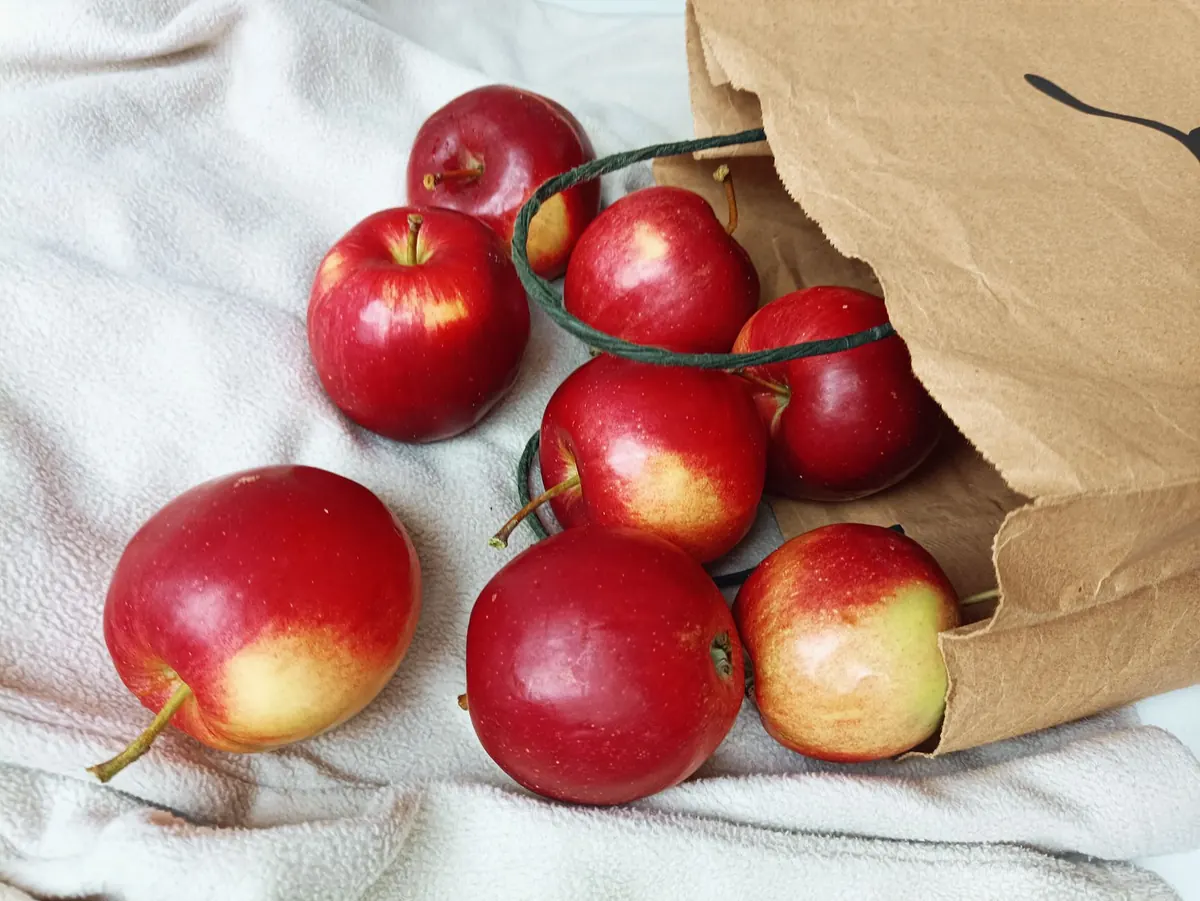
A firm avocado can sit in an open fruit bowl for a week and barely shift. Move the same avocado into a paper bag and it is often ready in two or three days. Nothing about the fruit changed — the container did. Ripening is driven by ethylene, a gas the fruit releases itself, and how you hold that gas around the fruit decides how quickly it softens, sweetens and colours up. Paper bags, cotton bags and plain bowls each handle ethylene, airflow and moisture differently, and knowing which does what saves a lot of wasted fruit.
Strip away the branding and every ripening container does the same three jobs: it decides how much ethylene stays near the fruit, how much air moves around it, and how much moisture hangs in the air.
These three pull against each other. Trap more ethylene and you also trap more moisture, so the container that ripens fastest is usually the one that needs the closest watching.
Brown paper does an unusually good job of all three. It is porous enough to let a little air in, dense enough to hold a useful amount of ethylene around the fruit, and it keeps humidity reasonably steady without leaving the skin wet.
Fold the top over twice and leave it loose — a folded bag, not a sealed parcel. Drop in a ripe banana or apple to boost the ethylene, then check the fruit every day after the first twenty-four hours. Keep the bag somewhere around 18–22°C and out of direct sun; a bag on a sunny windowsill can overshoot in an afternoon.
Once a pear or avocado gives slightly at the stem, take it out. Paper bags keep ripening long after the point you wanted, and that is where most fruit is lost.
A drawstring cotton produce bag is far more breathable than paper. The weave lets ethylene escape almost as fast as the fruit produces it, so ripening runs slower — closer to leaving fruit on the counter, but with protection from light, dust and fruit flies.
Cotton's real strength is moisture. It wicks dampness away from skins, which lowers the risk of mould. The trade-off is that it also dries fruit out. A peach left three days in cotton may soften but wrinkle, and a pear can lose the juiciness you were waiting for.
Use cotton for fruit that is already ripe and needs a day or two of storage, or for slightly under-ripe fruit you are happy to check over several days. If you want a nudge, fold the top loosely and add a ripe banana; the fabric will hold a little of the gas. Wash the bags regularly, because juice and sugars left in the weave invite mould.
An open bowl disperses ethylene almost as fast as the fruit makes it, which makes it the slowest option of the three. It has one genuine advantage: you can see every piece, which matters with fruit that ripens unevenly, such as a box of nectarines.
A heaped bowl is its own microclimate. Fruit touching fruit traps ethylene in the gaps and holds warmth, so a full bowl of bananas ripens itself. That is also why it bruises: pressure points soften first, then rot. Improve the bowl by covering it with a plate or a clean tea towel and nesting one ripe banana in the middle. If you use a lidded bowl, treat it like a paper bag and check daily for condensation, wiping the lid dry.
Reach for paper when you have firm fruit and want it ready in a day or three, especially with a ripe banana alongside. Reach for cotton for fruit that is already ripe, for anything prone to bruising, and for keeping apples away from the rest. Use a bowl when you plan to eat within a day or two, and cover it if you want a little more speed.
Temperature matters as much as the container: 18–22°C and out of direct sun, then the fridge once ripe — except for tomatoes and bananas. And if mould appears on soft fruit, throw the whole piece away rather than cutting off the visible patch.
Photo: elena_ sher / Pexels
Simple UK recipes that turn soft, overripe bananas, berries and stone fruit into banana bread, smoothies, compote...
A practical guide to the low-cost kit that controls humidity, airflow and ethylene when ripening fruit at home, from...
Learn how to ripen green tomatoes indoors before frost using paper bags, boxes and trays, with simple light and...

Bring your fruit to perfect ripeness at home.
